Youth Suicide Prevention Ireland

Irish charity · since 2007

No young person in Ireland should face a mental health crisis alone.

We put free mental health and suicide prevention resources into every secondary school in Ireland, and crisis information into the hands of anyone who needs it, the moment they need it.

In 19 years we have never received a euro of state funding. You can support this work (opens in a new tab).

Four young people on a park bench. Three are talking together beneath a speech bubble reading “Let’s Talk!”, while the fourth sits apart on his own.

Our impact in 2024

What your support paid for last year

Every figure below is taken from our audited Annual Report and Financial Statements for the year ending 31 December 2024.

5,222 crisis contacts handled
94.8% resolved at first contact Only 5.2% needed any follow-up.
753 secondary schools Every secondary school in the State received resource packs, twice in 2024.
50,000+ magazines distributed Up from roughly 29,500 in 2023.
2,286 resource packs requested Fulfilled across all 26 counties.
48,154 publication downloads Our booklets and guides, downloaded free.
21,151 video workshop plays The Let’s Talk classroom presentation.
24 booklets published 17 in the Coping With series and 7 on understanding addiction.
20,736 general enquiries answered From families, schools and frontline services.
3.3m page views across our websites Reaching just over 1 million people.

Source: YSPI Annual Report and Financial Statements 2024, audited by Raheny Accounts Limited and prepared under FRS 102 and the Charities SORP.

In detail

Our Main Programmes

Two programmes account for most of what we do: the resources we write and give away, and the counselling we fund for young people who cannot wait.

Flagship programme

Let’s Talk About Mental Health

Let’s Talk is where our Schools Programme and the Four Steps to Help Programme now live together. At its centre is a magazine written by a registered medical practitioner, covering anxiety, stress, depression, bullying and cyber-bullying, the warning signs of a mental health crisis, and how to listen to someone who is struggling.

We send resource packs to all 753 secondary schools in the State. In 2024 we did it twice, distributing over 50,000 copies of the magazine, and filled a further 2,286 pack requests from libraries, community groups, sports clubs and parents across all 26 counties.

The Coping With series - 17 booklets

Each one answers the same four questions in plain language: what is this, what are the signs, how do I know if I or my friends are affected, and how do I get help.

  • Anxiety
  • Depression
  • Stress
  • Self-harm
  • Suicidal thoughts
  • Suicide clusters
  • Warning signs of a crisis
  • Active listening
  • Cyber-bullying
  • Gaming addiction
  • Social media
  • Eating disorders
  • Bereavement
  • Debt
  • Exam stress
  • World events
  • Rural mental health

Understanding Addiction - 7 booklets

The same approach applied to the addictions young people contact us about most, including consent, added because it has become a significant trigger for young people and adults alike.

  • Alcohol
  • Drugs
  • Gaming
  • Gambling
  • Pornography
  • Sex
  • Consent

The classroom workshop

A 28-minute presentation with John Sharpson, Múinteoir John, made with Macalla Teo. It streams through any web browser, so it fits a class period without anyone having to travel. Book it once and you can play it up to 50 times over 100 days, to as many classes as you like. It comes with a student guide, a teachers’ handbook and a book of lesson plans.

  • Everything is free
  • Preview before you book
  • Read online or in print

Order a free pack (opens in a new tab)   Book the workshop (opens in a new tab)
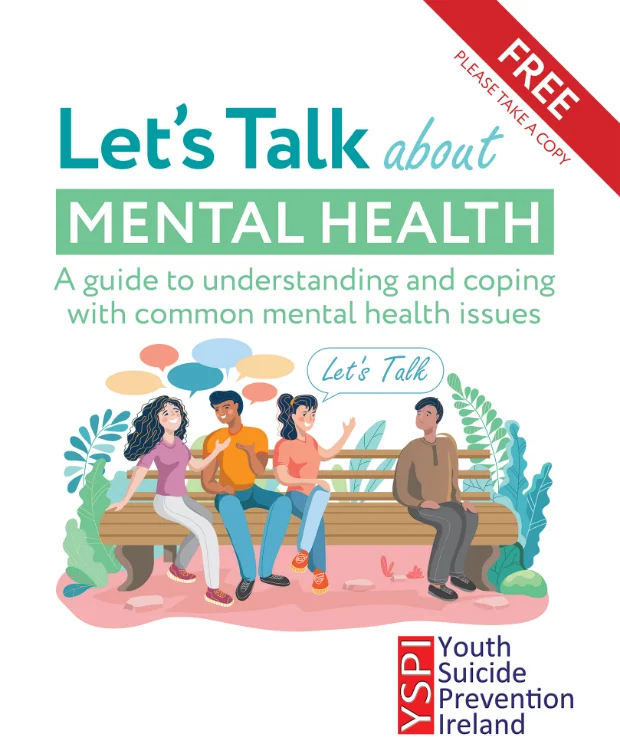
Cover of the Let's Talk About Mental Health magazine
The Let’s Talk magazine, sent free to every secondary school in Ireland.
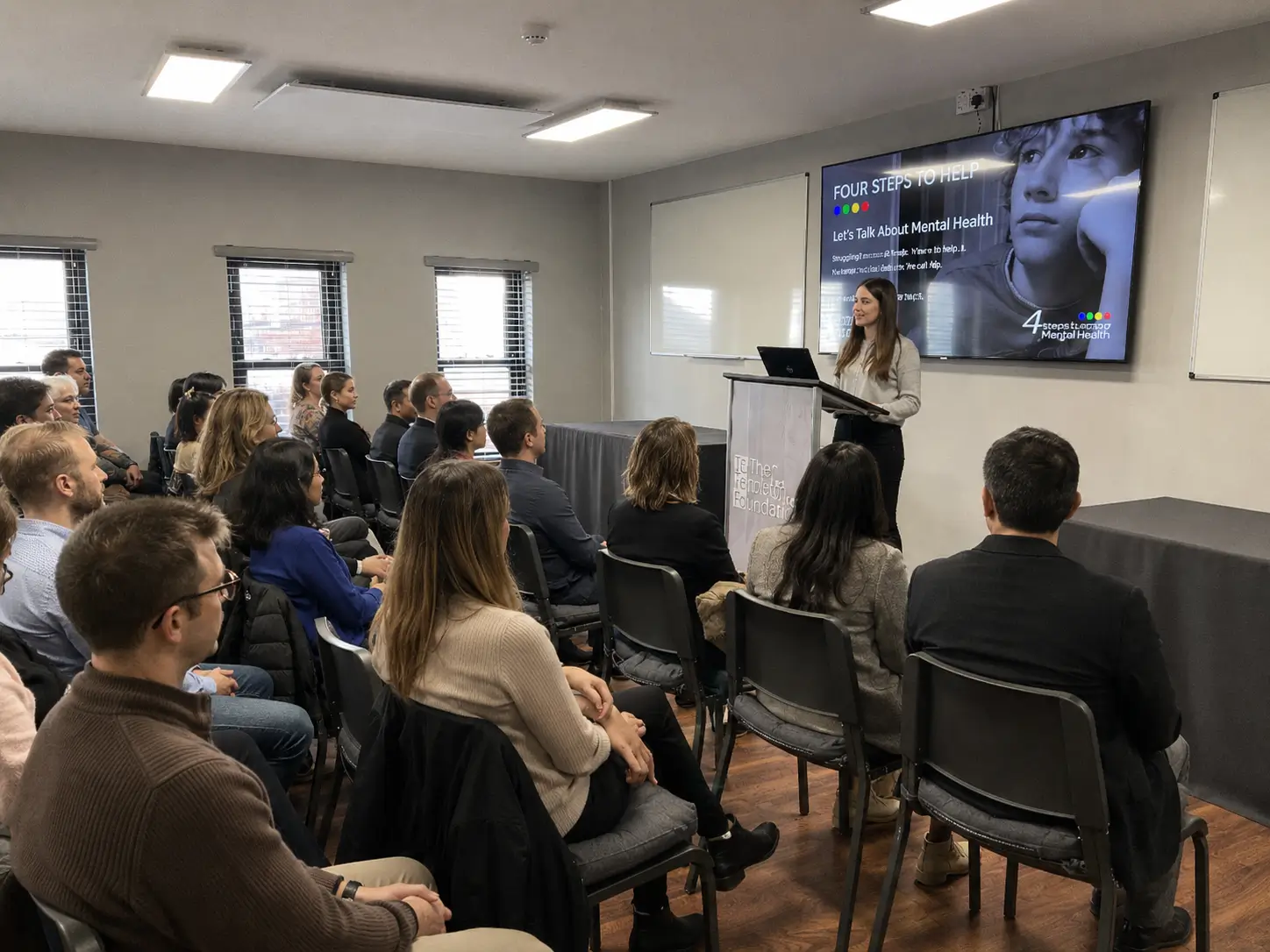
A Let's Talk About Mental Health session being delivered to a seated audience, with the Four Steps to Help slides on screen
A Four Steps to Help session in the training centre.
Crisis programme

Youth Crisis Counselling

Almost every school we visit tells us the same thing: there are young people in this school, or in this town, at risk right now, and there is no way to get them seen quickly. Waiting lists are the problem, not willingness.

So we pay for it. The Youth Crisis Counselling Service funds immediate access to counselling for young people in crisis or at risk of suicide or self-harm, with a registered counsellor, psychotherapist or psychologist, local to them, at no cost to the family.

Referrals come through a GP. That is deliberate: it means someone medically qualified has seen the young person and judged that they need support now.

  • Free to the family
  • GP referral
  • Registered practitioners

How the service works (opens in a new tab)

Alongside it, our crisis information service

Anyone can reach the information service directly, without a referral and without giving a name. It answers texts and web requests around the clock with helpline numbers, local supports and practical next steps.

In 2024 it handled 5,222 crisis contacts, and 94.8% were resolved at first contact.

Killarney

Training, and the National Mental Health Training Centre

We run mental health awareness training for staff teams, community groups, sports clubs and youth organisations, the same Four Steps to Help material we bring into schools, adapted for adults who are around young people every day.

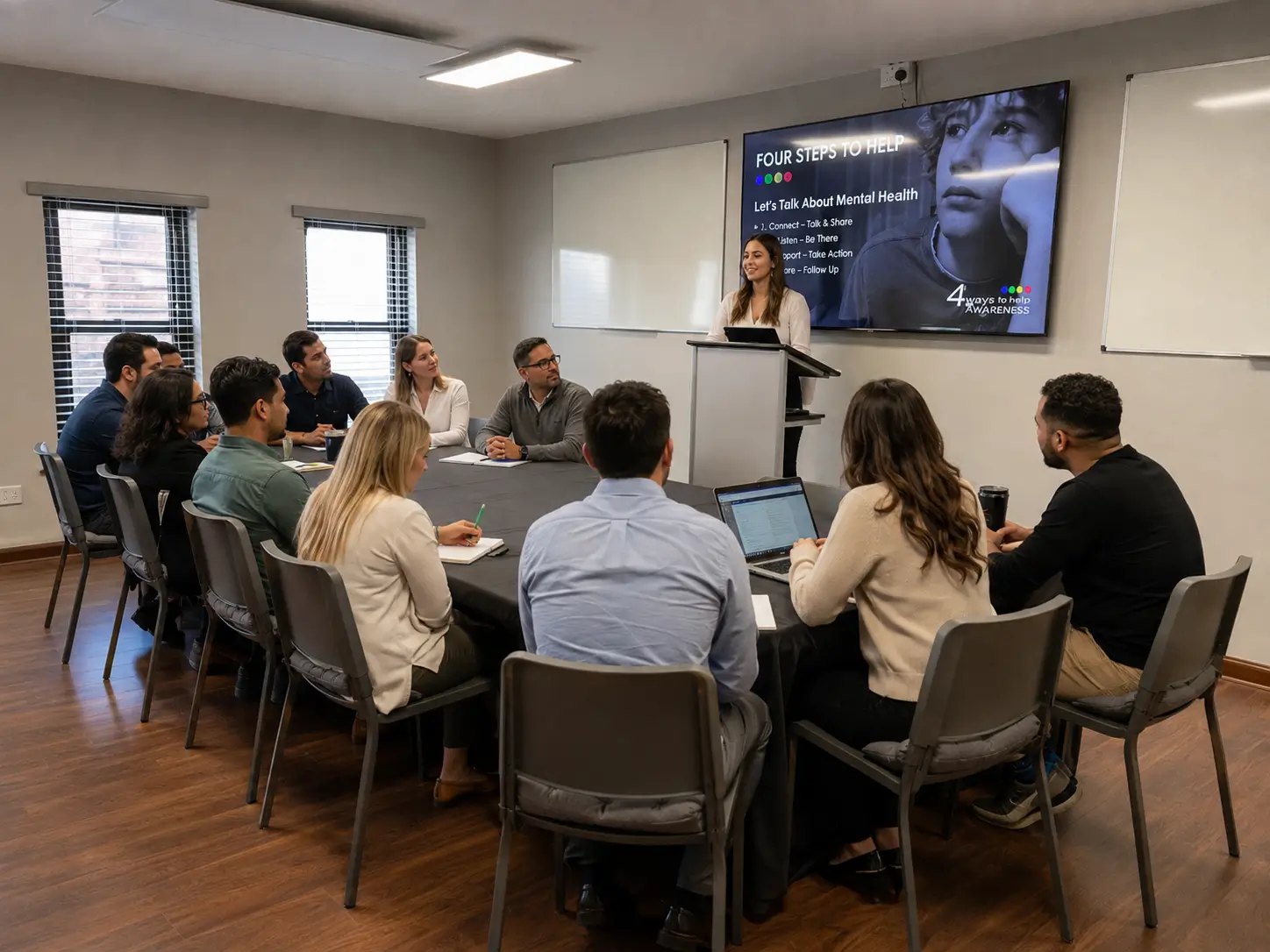
It runs out of our centre on New Street in Killarney, fitted out largely by volunteers. The main training room has full audio-visual facilities, including a 75" 4K display, video lighting and high-definition cameras, and can be laid out theatre style, as a seminar room, or for conference-style meetings.

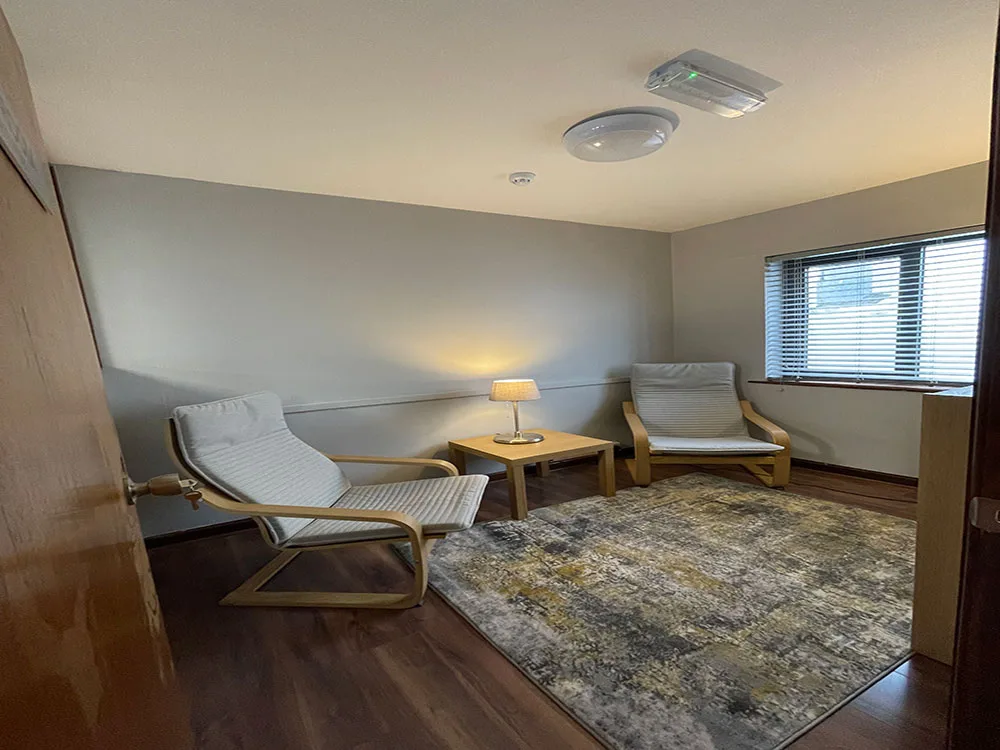
We also keep a quiet conversation room: comfortably furnished, sound-proofed and fitted with privacy glass, for one-to-one conversations or simply as somewhere to step away to.

  • In person or online
  • Groups of any size
  • Nationwide

Enquire about training

A training session around a boardroom table, with the Four Steps to Help slides on screen
Training delivered in conference layout.
The conversation room, with two armchairs, a lamp and a rug
The conversation room - sound-proofed, with privacy glass.

Search for information

Find the right service

Open a category below for more information about each service and links to the pages that cover it.

Schools Programme
Programmes
Information
Awareness
Outreach
Crisis
Fundraising
Legal

Where the money goes

Under 10c in every euro goes on running the charity

We have never received public money. Everything we do is funded by people who chose to give, so we treat knowing exactly where it went as the least we owe you.

  • Administrative costs were 9.5% of total income in 2024, €52,623 of €553,366.
  • Income rose 53% on 2023, while total expenditure fell.
  • Our Trustees and Chief Executive are unpaid volunteers. They hold no charity credit cards and no direct access to funds, but they have 24/7 access to the books.
  • The charity holds no mortgages and no major debt.
  • Accounts are kept by a part-time book-keeper and checked by independent auditors, Raheny Accounts Limited.
  • Reserves policy is to hold at least 10% of annual income against emergencies, so services never stop mid-year.

How we spent €367,280 in 2024

  • Charitable programmes €249,872
  • Cost of fundraising €64,785
  • Administration €52,623

Read the 2024 annual report

Help and assistance

If you are worried about yourself or someone else

Free, confidential, 24/7

Text CRISIS to 086 180 2895

You’ll get back information on emergency contacts, national helplines, local support groups, and directions to your nearest GP, out-of-hours clinic or safe place. The service is fully confidential.

You can request the same information through the form at gethelp.ie (opens in a new tab), and it will be sent straight back to you by text.

Text CRISIS now

Immediate assistance

If someone is in immediate danger:

  • Contact their GP or the local out-of-hours service.
  • Take them to your local hospital or A&E department.
  • Seek crisis counselling through the IACP (opens in a new tab).
Always call 999 or 112 if someone is seriously ill or injured and their life is at risk.

Contact us

Get in touch

We normally respond within an hour during office hours, Monday to Friday, 10am to 5pm. If you’d like a callback, leave your number.

Just to show us you’re a person. Figures or words both work.